How to Pick the Right One (Rates, Fees, and Real-World Fit)
In 2026, a savings account isn’t just a place to park money. It’s your daily money hub for UPI, bill payments, emergency cash, and short-term goals. That’s why more people are moving to app-first savings accounts: better “up to” rates, true zero-balance options, and faster service when something breaks.
Still, the Best Online Savings Account India 2026 won’t be the same for everyone. Rates change often. Many banks use tiered slabs, so a headline rate may apply only above a certain balance. And a “high interest” account can quietly lose its shine once fees and ATM rules kick in.
This guide gives you a practical shortlist of strong options (based on February 2026 public info), a simple way to compare them, and a step-by-step checklist to open and use an account safely.
What matters most in an online savings account (so you don’t chase the wrong “highest rate”)
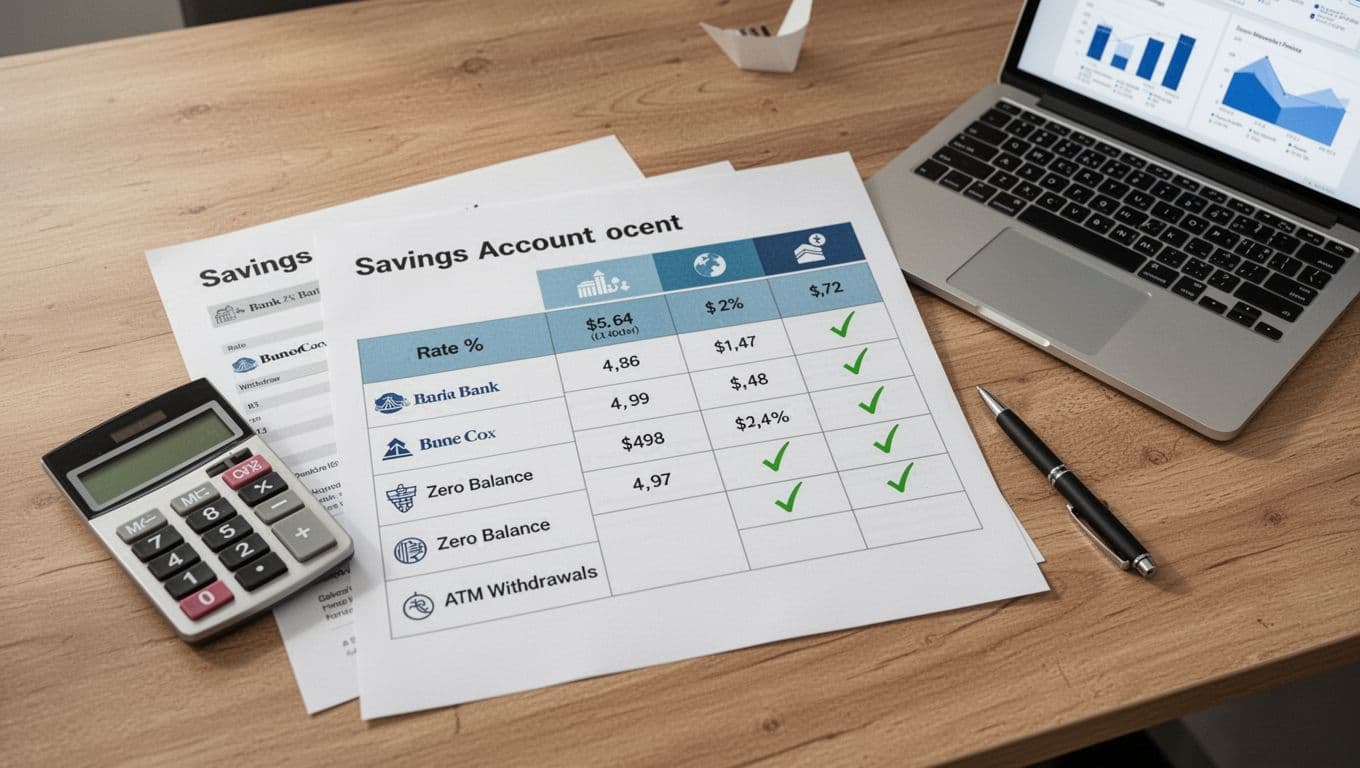
It’s tempting to sort by the highest number and call it a day. However, savings accounts work more like a set of rules than a single rate. The best choice comes from matching those rules to how you actually use money.
Start with these decision factors:
- Interest rate slabs (tiered rates): Your effective rate depends on where your balance sits most days.
- Minimum balance rules: Some accounts look “free” until your average monthly balance dips.
- ATM and debit card charges: Cash users feel these costs first.
- Transfer charges: NEFT and IMPS are often free, but not always unlimited.
- App reliability: A great rate doesn’t help if the app fails during rent day.
- Customer support: Live chat, call center response time, and branch access (if you want it).
- Speed of access: How fast can you move money out when it’s urgent?
For broader context on how banks compete on these features, compare a few independent roundups like 5paisa’s savings account comparison. Use them as a starting point, then verify the current schedule of charges and slabs in the bank’s own app or site.
Interest rates in 2026 are mostly tiered, here’s how slabs can change your returns
Tiered interest means the bank pays different rates on different balance ranges. In other words, your interest is not one flat number across your entire balance.
A quick example (using easy math):
If Bank A pays 3 percent up to ₹1 lakh, and 6 percent above ₹10 lakh, then a balance of ₹10,000 won’t enjoy that “up to 6 percent” headline. Most of your year might sit in the lower slab, especially if you pay rent, EMIs, and big bills.
Now flip it. If you keep ₹12 lakh steady, your effective rate can rise because more days sit in the higher band. That’s why people with higher balances often get better value from slab-based banks.
The best habit is simple: check which slab you’ll sit in for 20 to 25 days each month, not just on salary day.
Also remember that banks can revise savings rates during the year. A strong pick in February may look average by October, so you should re-check quarterly.
Hidden costs that quietly reduce your interest (minimum balance penalties, ATM rules, debit card fees)
Fees are the silent tax on savings accounts. They don’t feel big once, but they add up.
Watch for these common traps:
- Non-maintenance charges: If an account isn’t truly zero-balance, penalties can hit when your average dips.
- Limited free ATM withdrawals: Some accounts give a few free transactions, then charge per withdrawal.
- Debit card fees: Annual card fees can cancel out months of interest on smaller balances.
- SMS or alert charges: Small monthly charges still matter on low balances.
- Transfer fees after limits: Many banks keep NEFT and IMPS free for savings, but some add charges after a threshold.
If you withdraw cash often, prioritize clear ATM rules and a generous free limit. If you never withdraw cash, don’t overpay for a premium card you won’t use.
Best Online Savings Account India 2026, a practical shortlist by what you need
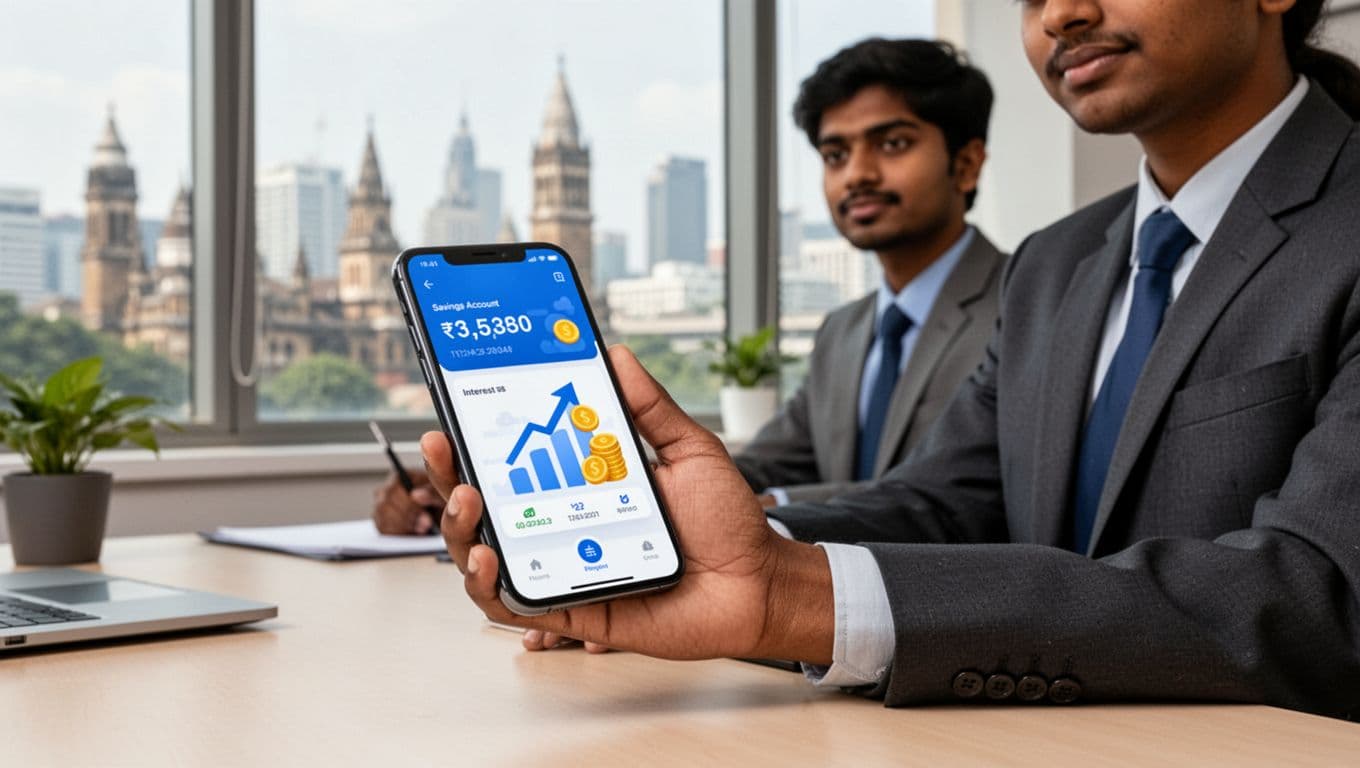
The best way to shortlist is to pick by “fit,” not hype. The options below reflect February 2026 publicly available details, but you should still confirm the latest slabs and fees before applying.
Here’s a quick comparison snapshot to narrow your list:
| Bank / account style | Interest positioning (Feb 2026) | Best for | Watch-outs |
|---|---|---|---|
| IDFC FIRST Bank savings | Up to 7% p.a. (tiered) | All-round digital users who hate fees | Confirm current slab and eligibility |
| RBL Bank savings | Tiered, up to 6% p.a. for higher balances | Higher balances (example tier starts at ₹10 lakh) | Effective rate lower on smaller balances |
| DCB Bank savings | Tiered, rates vary by band (reported up to ~5% in some ranges) | Medium balances that stay steady | Slab structure can be complex |
| Utkarsh Small Finance Bank | Tiered, reported up to ~4.25% in some bands | Rate-focused savers with modest balances | Small finance bank features vary by account type |
| Kotak 811 / Kotak savings | Reported 2.5% p.a. | Fast onboarding, familiar ecosystem | Lower yield, charges after free limits |
| HDFC regular savings | Reported 2.5% p.a. | Big-bank comfort and service access | Lower yield vs many digital-first options |
If you want to see how other sources frame the same trade-offs, skim a guide like Olyv’s 2026 savings account overview and compare it to what the bank currently shows inside its app.
Best for highest “up to” interest rates on larger balances: DCB Bank, Utkarsh Bank, RBL, IndusInd
If your balance stays high most months, tiered banks can reward you. Based on February 2026 summaries, RBL is a clear example of “higher balance, higher slab,” with an advertised tier reaching 6 percent p.a. for larger balances. DCB and Utkarsh Small Finance Bank also run tiered schedules, although exact slabs differ and can change.
IndusInd offers multiple savings variants with tiered positioning, but the best rate depends on the account type and balance. In practice, IndusInd can be appealing if you want a premium banking bundle (and, for some customers, more global-friendly features), but you should confirm the current schedule inside the bank’s official channels.
The main thing to remember: these accounts shine when you can keep higher balances consistently. If your balance swings heavily through the month, your effective rate can end up closer to the lower slab.
Best zero-balance picks with strong everyday features: IDFC FIRST Bank and RBL Digital Savings
For everyday banking, features often beat a slightly higher rate. IDFC FIRST Bank stands out in February 2026 data because it advertises up to 7 percent p.a., supports full video KYC for online opening, and promotes zero charges on many common services (including transfers and ATM withdrawals, subject to the bank’s terms). It’s the kind of account that feels “quietly efficient” once it’s set up.
RBL also offers digital-first onboarding and can fit people who want a modern app experience, especially if they may grow into higher slabs over time.
If you’re a student, a first-job earner, or someone rebuilding a clean money routine, a strong zero-balance option helps because you won’t get punished for a thin month.
For an extra perspective on what many Indians compare in 2026, see this savings account comparison roundup, then double-check every claim against the bank’s current fee schedule.
Best simple, fast digital onboarding from large banks: Kotak 811, SBI YONO savings options
Sometimes you want the easiest entry account, not the maximum interest. Kotak 811 is a popular example of a quick-start, app-led savings account under a large private bank. As of the latest reported schedule (effective July 2025), Kotak’s savings rate sits around 2.5 percent p.a.. That’s not the top yield, but onboarding and day-to-day usability can feel straightforward.
SBI YONO suits people who want SBI’s ecosystem for UPI, bill pay, and broad compatibility across services. The trade-off is that interest rates on large-bank savings accounts are often lower than aggressive tiered offers.
If you value familiarity and quick setup, these are strong “get it done” picks.
Best for branch comfort even if rates are lower: SBI and HDFC regular savings
Even in 2026, plenty of people still want a branch option. Maybe you handle family accounts, have occasional paperwork needs, or just want a human when something goes wrong.
That’s where SBI and HDFC regular savings accounts stay relevant. HDFC’s reported savings rate sits around 2.5 percent p.a., which is easy to understand because it’s uniform. SBI’s value is often its reach and service access, with interest typically credited quarterly.
This category is about service, not yield. If your goal is maximum interest, you’ll probably want a digital-first alternative. If your goal is fewer surprises during life admin, big-bank comfort can win.
How to choose the right account for your balance and lifestyle in 10 minutes
This is the fastest framework that works without spreadsheets.
First, write your typical end-of-month balance on a note. Next, estimate how often you withdraw cash. Then compare only the fees you’re likely to pay.
Here’s what to do, in order:
- Match your balance to slabs: Find where you’ll sit most days, not just after salary credit.
- Compare real fees: ATM usage, debit card annual fee, and minimum balance rules.
- Test the app: Install it first, read reviews, and check login stability during peak times.
- Verify service channels: Can you reach support quickly, and do they solve issues?
- Keep emergency money accessible: Don’t chase a slab that forces you into awkward conditions.
A lot of confusion comes from treating savings accounts like investments. Savings accounts are for liquidity. For longer goals, you’ll usually look at other tools separately.
A quick match guide: which account type fits your balance range and cash-withdrawal habits
Think of these as four profiles:
- Low balance, hates penalties: Choose a true zero-balance account with clear free services. Avoid accounts with average-balance requirements.
- Medium balance, wants better slabs: Look for tiered banks where your typical balance falls in a meaningful slab. Avoid complex schedules you won’t track.
- High balance, rate-focused: Consider tiered options like RBL where higher slabs kick in at larger balances. Avoid “up to” claims that only apply at extreme tiers.
- Frequent cash user: Prioritize ATM rules, free limits, and surcharge clarity. Avoid accounts where out-of-network withdrawals get expensive fast.
If you want another cross-check list of popular picks, compare against a simple roundup like CashMints’ 2026 savings accounts list but treat it as a lead, not a final answer.
Before you open the account, run this safety and service checklist
A good account should feel safe and boring. That’s the point.
Use this short checklist:
- Confirm the bank is RBI-regulated (all mainstream banks are, but verify if it’s unfamiliar).
- Know deposit insurance: DICGC covers up to ₹5 lakh per depositor per bank (principal plus interest).
- Check KYC requirements: PAN, Aadhaar, address match, and video KYC availability.
- Read the schedule of charges: minimum balance, ATM rules, debit card fees, SMS charges.
- Confirm support channels: in-app chat, phone, email, branch (if needed).
- Lock down app security: strong phone lock, biometric login, and transaction alerts.
If an account feels unclear about fees, treat that as a warning, not a minor detail.
Also keep an eye on regulatory changes that affect zero-balance banking. RBI updates for Basic Savings Bank Deposit Accounts (BSBDA) take effect from April 1, 2026, expanding free services and setting minimum free withdrawal expectations. That matters if you’re choosing a zero-balance route.
Opening and using an online savings account smoothly (KYC, transfers, and smart habits)
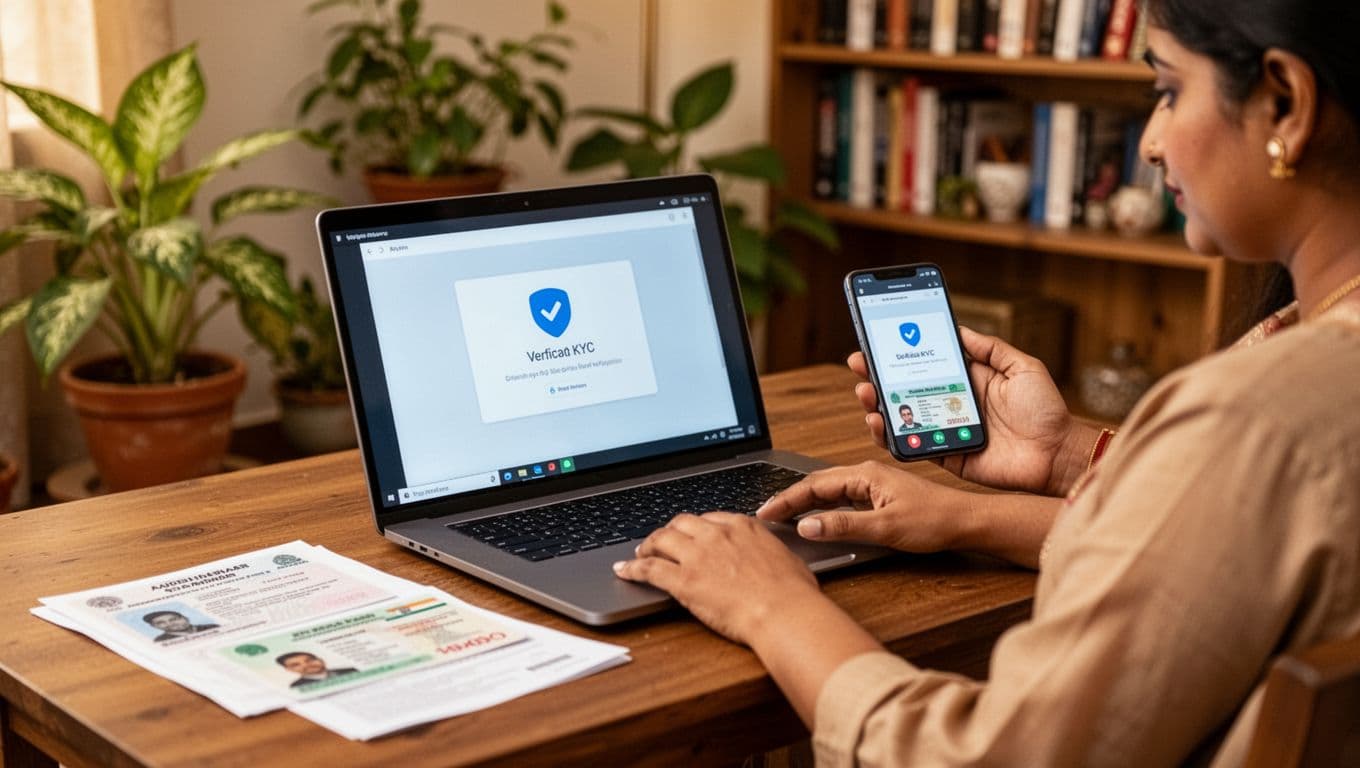
Once you’ve shortlisted two or three options, opening the account is usually the easy part. The real win is setting it up correctly on day one so you avoid hassles later.
Most online openings follow the same pattern: application, OTP verification, video KYC (or in-person if needed), then initial funding. After that, you connect UPI and start using it like your daily wallet.
Two reminders help a lot:
- Keep your savings account as your “cash buffer,” not your long-term investment engine.
- Re-check rates and slabs quarterly, because banks adjust them.
Step-by-step: open the account, set UPI, add a nominee, and avoid common setup mistakes
Follow this sequence:
- Choose the account variant (zero-balance vs regular, debit card type).
- Start the application in the bank app, enter PAN and Aadhaar details.
- Complete video KYC when prompted, keep good lighting and steady internet.
- Fund the account with a small transfer first, then confirm it reflects correctly.
- Set up UPI and test a low-value payment to a known contact.
- Add a nominee immediately, don’t postpone it.
- Turn on alerts for every debit, credit, and UPI transaction.
Common issues are boring but real: name mismatch between PAN and Aadhaar, address proof conflicts, or a failed video KYC slot. Save screenshots of confirmations, and read your first statement carefully. That’s where unexpected fees show up early.
Make your interest work harder with simple routines (without taking extra risk)
You don’t need complex tricks. A few routines do most of the work:
Set an automatic monthly transfer so your savings builds before you spend. Maintain a small buffer to avoid slipping into a lower slab. Keep emergency funds accessible so you don’t break the system during a surprise expense. Track fees for the first two months, then adjust if anything looks off. Finally, re-check the bank’s slab page every quarter, because rates can change mid-year.
These habits keep your savings account useful, liquid, and quietly profitable.
Conclusion
The Best Online Savings Account India 2026 depends on three things: your typical balance, your fee sensitivity, and how much you rely on cash withdrawals. Start by shortlisting two or three banks, then compare slabs and the charges you’ll actually pay. Next, open the account that fits your routine, not the one with the loudest headline rate. Before you apply, confirm the current slab chart in the app or on the bank site, then set up your nominee and alerts on day one.